
How Can Mobile App Design Accelerate Business Growth?
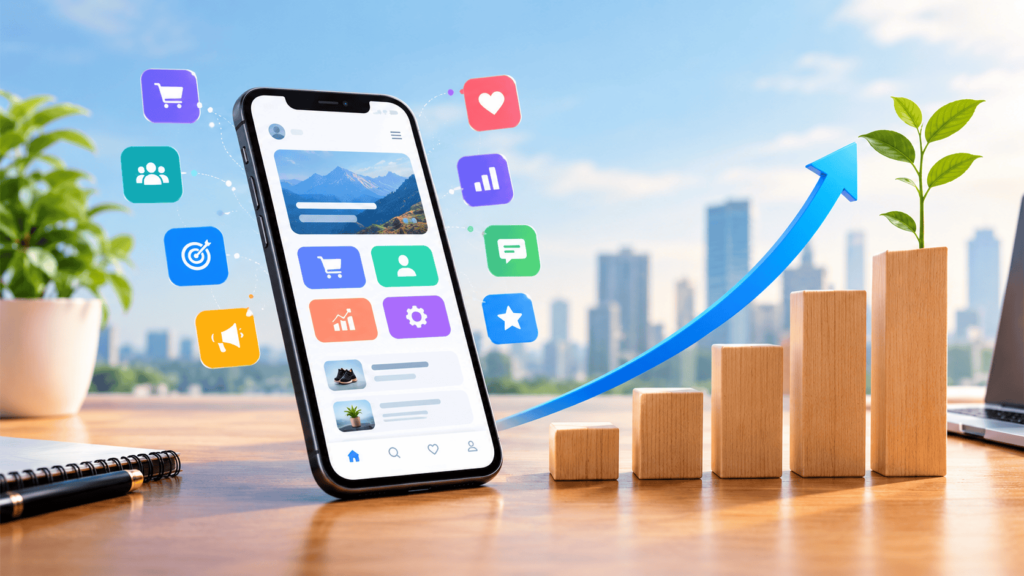
A mobile app is more than a digital version of a business website. It can become a direct channel for customer interaction, service delivery, communication, and business growth. Mobile app design plays an important role in making that experience simple, useful, and engaging. For businesses planning to build or improve an application, custom mobile application design allows the app experience to be shaped around specific business goals and customer needs. At WebBirth, mobile app design and development focuses on creating practical digital experiences that help businesses connect with users across Android and iOS platforms.
A well-planned application can make it easier for customers to find information, complete tasks, make purchases, access services, or communicate with a business. However, these benefits depend heavily on how easily people can understand and use the application.
Why Does Mobile App Design Matter for Growth?
The first interaction a user has with an application can influence whether they continue using it. A cluttered interface, confusing navigation, or unnecessary steps can make even a technically capable application difficult to use. Good mobile app design brings together visual design, navigation, functionality, content, and user experience design. The objective is not simply to make an application look attractive. It is to create an interface that helps users complete their intended tasks with less confusion.
For businesses, this can support:
- Easier customer interactions
- Better engagement with digital services
- More convenient access to products or information
- Stronger brand consistency
- Smoother customer journeys
- Opportunities to improve services based on user behaviour
When design and functionality work together, an app can become a useful part of a company’s overall digital strategy.
What Makes Custom Mobile Application Design Different?
A standard application template may provide a basic structure, but businesses often have different customers, workflows, services, and objectives. Custom mobile application design allows these requirements to influence the interface from the beginning.
For example, an e-commerce application may need a straightforward product discovery and checkout experience, while a healthcare application may require appointment booking, patient information, notifications, and secure access. A business management application may need dashboards, reports, user roles, and workflow-based navigation.
Customisation makes it possible to design the application around these specific requirements instead of trying to fit the business into a fixed structure. This approach can also make future improvements easier when the application is planned with scalability in mind. Android’s current architecture guidance, for example, describes scalable and maintainable architecture as an important foundation for high-quality applications.
How Does App Design Improve User Experience?
Users generally want to accomplish something quickly when they open an application. They may want to purchase a product, book an appointment, check an order, submit information, or access a service.
App design should therefore make the user’s next step easy to understand. Clear navigation, readable content, consistent buttons, appropriate spacing, and logical screen layouts can reduce unnecessary effort. The design should also provide useful feedback when users complete an action or when something needs their attention. This is where user experience design becomes important. Instead of designing individual screens separately, UX considers the complete journey from the user’s first interaction to the final action.
What Should a Business Consider Before Designing an App?
Before beginning mobile app design, businesses should understand what the application is expected to accomplish. A clear objective can help prevent unnecessary features and complicated interfaces.
Consider these questions:
- Who will use the application?
- What problem will the app solve?
- Which actions are most important to users?
- What information should appear first?
- Which features are essential at launch?
- What devices and platforms should the app support?
- How will the application connect with existing systems?
- How can the application grow as the business grows?
Answering these questions creates a foundation for the design process. It also helps designers and developers prioritise features rather than filling the application with functions that users may rarely need.
How Do UI and UX Work Together in Mobile App Design?
UI and UX are closely connected, but they address different parts of the application experience. UI focuses more on the visual and interactive elements of the interface, including typography, buttons, colours, icons, layouts, forms, and other components. UX focuses on how the entire experience works from the user’s perspective.
A visually attractive interface may still provide a poor experience if users cannot find what they need. Similarly, a functional application may feel outdated or difficult to use if its interface is inconsistent. Effective mobile app design brings both areas together. The result should look consistent while also providing a logical and easy-to-follow experience. Android’s UI architecture guidance describes the UI as the primary point of user interaction and explains how the interface responds to changes in application data.
How Can Mobile App Design Support Customer Engagement?
An application can provide customers with a direct way to interact with a business. Instead of requiring users to repeatedly search for a website or contact a business through different channels, an app can bring relevant services into one accessible environment.
Depending on the business model, this may include:
- Product browsing and purchasing
- Appointment or service booking
- Customer accounts
- Order tracking
- Notifications
- Loyalty features
- Support and communication
- Personalised content
- Digital payments
- Service requests
The design should make these features easy to discover without overwhelming the user. Personalisation can also be useful when it genuinely improves the experience. For example, an application may remember preferences or display relevant information based on previous interactions. However, businesses should remain transparent about data collection and use.
Why Is Responsive and Adaptive Design Important?
People use applications on different screen sizes and devices. An interface that looks appropriate on one device may not provide the same experience on another. Therefore, mobile app design and development services should consider screen sizes, orientations, text sizes, and different device configurations during the planning stage.
For businesses supporting Android, the wider device ecosystem also makes adaptability important. Android’s architecture documentation notes that applications can run across phones, tablets, foldables, ChromeOS devices, car displays, and other form factors. Adaptive design can help maintain a consistent experience as users access the application through different devices.
How Does Mobile App Design Affect Business Performance?
A good application should support measurable business objectives rather than focusing only on appearance. For example, an e-commerce business may monitor product views, add-to-cart activity, and completed purchases. A service business may track bookings, enquiries, and repeat usage. A subscription application may focus on registrations, engagement, and retention.
This makes it possible to identify where users experience difficulties and where improvements may be needed. Design should therefore be treated as an ongoing process. User feedback, analytics, performance information, and changing business requirements can all contribute to future improvements. A successful application does not necessarily remain unchanged after launch. Continuous refinement can help keep the experience relevant as customer expectations and technology evolve.
What Should You Look for in a Mobile App Design Company?
Choosing a mobile app design company involves more than reviewing attractive screenshots. Businesses should consider whether the team understands both design and development requirements.
Look for experience in:
- UI and UX planning
- Custom application development
- Android and iOS platforms
- Responsive and adaptive interfaces
- API and third-party integrations
- Application security
- Performance optimisation
- Testing and quality assurance
- Post-launch improvements
It is also useful to discuss the business objective before discussing individual design elements. A good design process should connect the interface with the actual needs of the users and the organisation. WebBirth provides UI/UX design and custom mobile application development for Android and iOS, combining design and development services for businesses and startups.
What Is the Process of Creating a Custom Mobile App?
A structured process helps turn an initial idea into a usable application. While the exact workflow can vary, mobile app design commonly involves several stages.
1. Requirement discovery:
The business objectives, target users, features, technical requirements, and expected outcomes are identified.
2. User flow planning:
The main journeys users will take through the application are mapped out.
3. Wireframing:
Basic screen structures are created to establish navigation and content hierarchy before detailed visual design begins.
4. UI design:
Colours, typography, icons, buttons, layouts, and other visual elements are developed into a consistent interface.
5. Prototype and testing:
Interactive prototypes can help identify navigation or usability problems before development is completed.
6. Development:
The approved design is converted into a functional application and connected with required systems and services.
7. Testing and refinement:
The application is tested across relevant devices and scenarios to identify technical or usability issues.
8. Launch and improvement:
After release, performance and user feedback can guide future updates.
Following a structured process can reduce the risk of designing features without a clear purpose and helps keep the project aligned with business requirements.
How Can Businesses Get More Value From Mobile App Design?
The value of an application comes from how effectively it solves a real problem. Businesses should therefore avoid adding features simply because they are technically possible. A focused application with clear navigation can often provide a better experience than one overloaded with functions. Start with the features that matter most to users and the business, then expand based on actual requirements and feedback.
Accessibility should also be considered from the beginning. Clear language, readable content, appropriate contrast, understandable navigation, and support for different interaction needs can make an application more usable for a wider audience. Apple’s accessibility and inclusion guidance recommends designing experiences around the different needs and perspectives of users.
Conclusion
Mobile app design is an important part of building a digital product that people can understand and use comfortably. From navigation and user experience to responsive layouts and accessibility, every design decision can influence how customers interact with an application. Custom mobile application design gives businesses the flexibility to build experiences around their users and specific objectives. When combined with reliable development, testing, performance, and continuous improvement, a mobile application can become a valuable part of a company’s digital growth strategy.
WebBirth helps businesses create mobile app design and development services tailored to their requirements, including custom mobile applications for Android and iOS. If your business is planning a new application or improving an existing one, a well-planned design can provide the foundation for a more useful and scalable digital experience.
Frequently Asked Questions
1. What is mobile app design?
Mobile app design is the process of planning and creating the visual interface and user experience of a mobile application. It includes layouts, navigation, interactions, content presentation, and other elements that determine how users interact with the app.
2. Why is custom mobile application design important?
Custom mobile application design allows businesses to create an application around their specific customers, services, workflows, and business objectives instead of relying entirely on a generic template.
3. What is the difference between UI and UX design?
UI focuses mainly on the visual interface and interactive elements of an application, while UX focuses on the overall experience, including navigation, usability, user flows, and how easily users can complete their goals.
4. How much does mobile app design cost?
The cost depends on factors such as the number of screens, features, platforms, integrations, complexity, design requirements, and development scope. A simple business application and a complex enterprise application can have very different project requirements.
5. Should an app be designed for both Android and iOS?
If the target audience uses both platforms, businesses may consider supporting both Android and iOS. The design should account for platform-specific conventions while maintaining consistent branding and functionality.
6. Can mobile app design improve customer engagement?
A well-designed application can make it easier for customers to access services, interact with a business, complete tasks, and receive relevant information. The actual impact depends on the usefulness of the application, implementation, audience, and ongoing optimisation.